
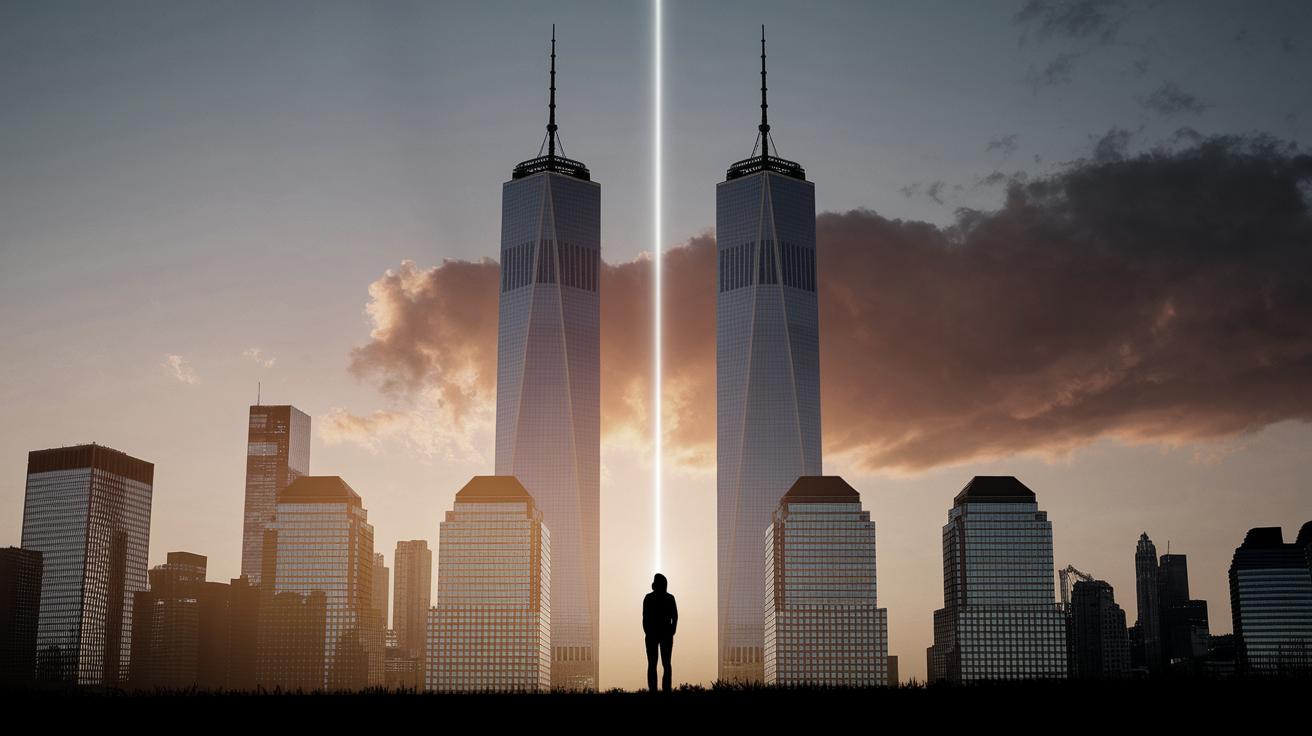
Exploring 9/11 Conspiracy Theories
In the years since the tragic events of September 11, 2001, a host of conspiracy theories have emerged, seeking to explain and, at times, challenge the official narrative. This blog post delves into the most prominent of these theories, examining their origins, the evidence provided by believers, and the societal impact they have had. From the notion of a world government orchestrating the attacks to unusual claims about business jets and Jewish elites, the realm of 9/11 conspiracy theories is vast and varied. By exploring these ideas and their development over time, we aim to provide a comprehensive overview of the alternative narratives surrounding one of the most pivotal events in modern history.
World government
One of the more pervasive 9/11 conspiracy theories involves the concept of a shadowy world government allegedly orchestrating the attacks. Proponents of this theory often point to supposed evidence of global elites collaborating to foster a new world order, with 9/11 being a calculated move to justify greater control over global politics and economics. Such theorists argue that by instilling fear and chaos, these elites could centralize power and implement policies that favor their interests.
Critics of the world government conspiracy theory point out the lack of concrete evidence supporting these claims. They argue that the complexities and logistical challenges involved in orchestrating such an event would require a level of secrecy and cooperation that is practically impossible. Furthermore, many dismiss these ideas as a form of modern-day folklore, born out of distrust in governmental institutions and fear of globalization.
Uncontrolled fires
Another frequently cited theory pertains to the nature of the fires that led to the collapse of the Twin Towers. Skeptics argue that the fires caused by the airplane crashes were not intense enough to cause the towers to fall, suggesting instead that controlled demolitions were responsible. Videos and testimonies are often cited, where individuals claim to have heard explosions prior to the collapse.
Engineers and experts have, however, provided explanations aligning with the official narrative, emphasizing that the impact of the planes—and the subsequent fires—were sufficient to weaken the structural integrity of the buildings. The architectural design and use of materials, they argue, contributed to the manner in which the towers ultimately fell. The discourse around these competing explanations remains a focal point for those invested in uncovering the “true” story.
Go viral
The evolution of 9/11 conspiracy theories is heavily entwined with the internet’s role in disseminating information. Memes, videos, and articles purporting alternative narratives have proliferated online, creating echo chambers that reinforce and amplify such theories. The viral nature of these theories has enabled them to spread rapidly, reaching and influencing a diverse audience across the globe.
Social media platforms and forums have particularly been influential in the rapid dissemination of conspiracy content. The ease of sharing information, coupled with the emotional and often shocking nature of conspiracy theories, has contributed to their persistent presence in online discourse. Scholars suggest that this digital wildfire reflects broader societal anxieties and the human tendency to seek patterns and meaning in chaos.
Business jet
Among the more niche conspiracy claims is the idea that a business jet, rather than a commercial airliner, was involved in the attack on the Pentagon. This theory primarily stems from eyewitness accounts and the examination of the debris field, which some claim is inconsistent with the destruction expected from a commercial jet.
Investigations and experts, however, have repeatedly affirmed that American Airlines Flight 77, a Boeing 757, was responsible for the attack. The discrepancies noted in the aftermath are frequently attributed to the chaotic nature of the event and the challenges inherent in assessing the wreckage of such a high-impact crash. This particular theory highlights the extent to which differing perspectives can emerge from the same set of facts, especially in times of crisis.
Jewish elites
A highly controversial and distressingly anti-Semitic conspiracy theory suggests that Jewish elites were involved in orchestrating the 9/11 attacks. Proponents of this theory claim that Jewish employees were warned not to report to work at the World Trade Center on the day of the attacks, and they accuse Israel and Zionist interests of orchestrating the event for political gain.
This theory has been widely discredited and condemned as baseless and rooted in discriminatory ideologies. Research shows no evidence supporting such claims, and they are often linked to long-standing anti-Semitic tropes. The propagation of this theory underscores the dangerous potential for conspiracy theories to perpetuate hate and division.
The evolution of the 9/11 conspiracy theories
Since 9/11, conspiracy theories have evolved, adapting to new evidence and reinterpretations of events. Initially centered on the disbelief that such a devastating attack could be carried out by terrorists alone, the theories have since branched out into various narratives, each with its own focus and level of credibility.
Over time, these theories have absorbed new events and developments, integrating them into their frameworks to maintain relevance. The rise of social media and the digitization of information have played significant roles in this evolution, providing new platforms for conspiracy theorists to share ideas and reinforce beliefs. This adaptability ensures the persistence of 9/11 conspiracy theories in public discourse.
The people who think 9/11 may have been an ‘inside job’
A substantial portion of the 9/11 conspiracy theorist community subscribes to the notion that the attacks were an ‘inside job’ orchestrated by elements within the U.S. government. This belief is often fueled by perceived inconsistencies in the official reports and a general mistrust in government transparency.
Advocates for this theory argue that the attacks served as a pretext for wars in the Middle East and the expansion of governmental powers under the Patriot Act. While these theories resonate with a diverse audience, they are often challenged by the broader public and dismissed by experts who stress the robustness of the evidence supporting the official account.
What happened on 9/11?
On September 11, 2001, a series of four coordinated terrorist attacks were carried out by the militant extremist group al-Qaeda. Four passenger airliners were hijacked by 19 al-Qaeda terrorists with the aim of crashing them into key U.S. landmarks. Two planes struck the Twin Towers of the World Trade Center in New York City, causing their eventual collapse, while a third plane hit the Pentagon in Arlington, Virginia.
The fourth jet, United Airlines Flight 93, was headed toward Washington, D.C. but crashed into a field in Pennsylvania after passengers attempted to regain control from the hijackers. The attacks resulted in the deaths of nearly 3,000 people, marking it as one of the deadliest acts of terrorism in modern history and prompting widespread international military and legislative responses.
Next steps
| Subheading | Key Points |
|---|---|
| World government | A theory positing global elites’ involvement in orchestrating 9/11 to control global politics and economics. |
| Uncontrolled fires | Claims that fires from the crashes were insufficient to cause the towers’ collapse, suggesting controlled demolitions. |
| Go viral | Exploration of how the internet and social media have facilitated the rapid spread of 9/11 conspiracy theories. |
| Business jet | The theory suggesting a business jet, rather than a commercial airliner, hit the Pentagon. |
| Jewish elites | A condemned theory alleging Jewish elites’ involvement, reflecting anti-Semitic roots. |
| The evolution of the 9/11 conspiracy theories | How theories have adapted over time, influenced by new evidence and digital information channels. |
| The people who think 9/11 may have been an ‘inside job’ | The belief that the U.S. government orchestrated the attacks for political and military gain. |
| What happened on 9/11? | A factual account of the terrorist attacks carried out by al-Qaeda, leading to significant global repercussions. |