
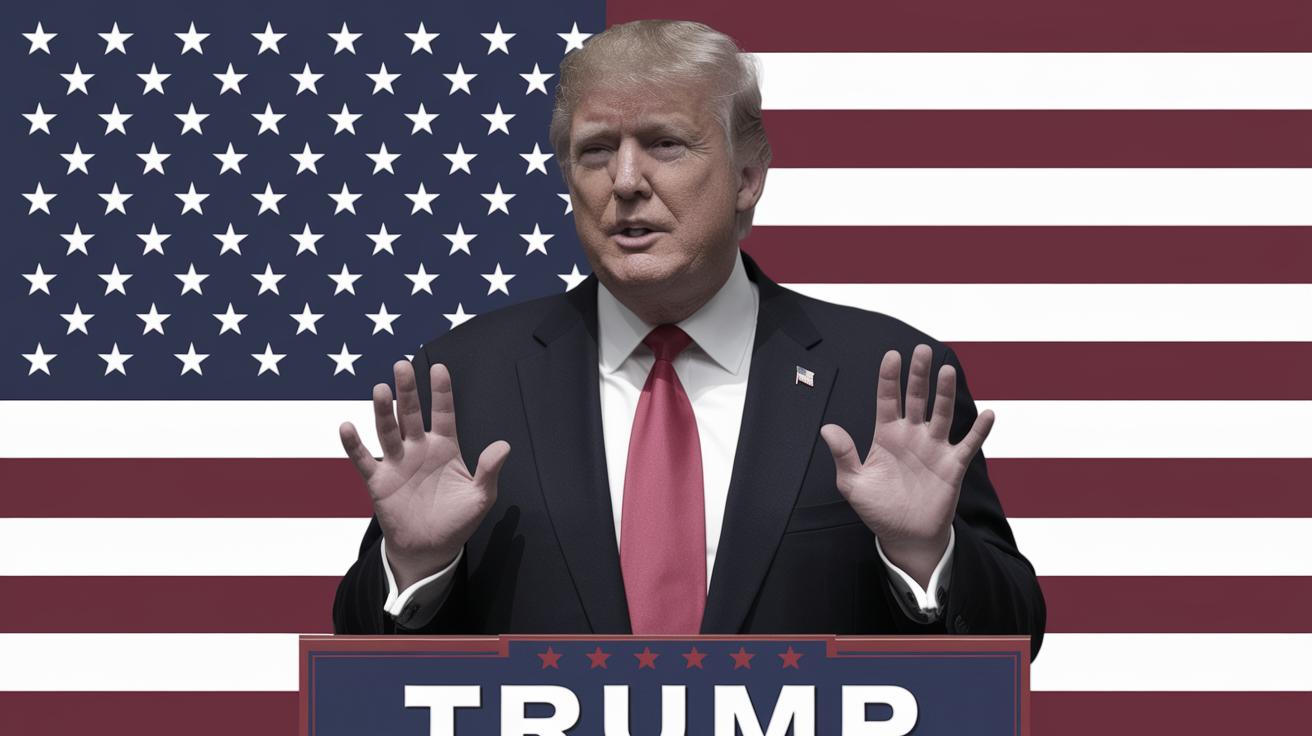
Trump Breaking News Today
In the ever-evolving landscape of American politics, Donald Trump remains a compelling figure whose actions and rhetoric continue to captivate and polarize audiences worldwide. This blog post delves into today’s breaking news concerning Trump, covering a range of topics from his proposed tariffs on foreign films to his influence on global birth rates, and the implications of his policies on the U.S. and beyond. Through insightful analysis and timely updates, we explore the latest developments and their potential impact on both a national and international scale. Join us as we dissect the most recent stories, offering a comprehensive overview of Trump’s ongoing legacy and influence.
Latest news
Trump threatens tariffs on foreign films: Who could be hit?
Recent announcements from the White House suggested that Donald Trump is contemplating imposing tariffs on foreign films. This move has created ripples in the international film industry, with key stakeholders expressing concerns over the potential economic impact. The tariff proposal is aimed at protecting American film businesses by leveling the playing field, but it has stirred debates on creativity and global cultural exchange.
Nations with a considerable film output stand to lose revenue if these tariffs are enacted. Countries such as the United Kingdom, France, and South Korea, known for their prolific film industries, might face significant challenges. For consumers, the worry lies in limited access to diverse global content, which could stifle innovation and cultural enrichment that comes from exposure to international cinema.
A quick guide to Donald Trump
Donald Trump, the 45th President of the United States, is a businessman turned politician known for his unconventional leadership style and decisive policy actions. Trump’s presidency was marked by significant tax cuts, attempts to dismantle Obamacare, and a hardline immigration stance. His administration took a unique approach to economic and foreign policy, often steering clear of traditional diplomatic channels.
Before his foray into politics, Trump was a prominent figure in the real estate industry and a well-known television personality. With assets ranging from hotels to golf courses, his business acumen is both admired and critiqued. Trump’s presidency was filled with controversy and impeachment trials, yet his influence within the Republican Party remains substantial as he navigates post-presidential life.
Analysis
The analysis of Trump’s policies often revolves around his economic strategies, particularly those related to trade and tariffs. Critics argue that Trump’s policies are protectionist, while supporters claim they serve to rejuvenate American industry. Evaluating Trump’s impact requires a nuanced understanding of global economics, shifting alliances, and domestic priorities.
His economic decisions, such as imposing tariffs on China, have sparked trade wars, affecting international markets and altering supply chains. The analysis also delves into Trump’s communication style, which relies heavily on social media, allowing him to bypass traditional media gatekeepers and directly engage with the public.
Why Trump’s tariffs aren’t really reciprocal
While Trump often argued that his tariffs were reciprocal, critics suggest this may not entirely be the case. Reciprocal tariffs imply a mirrored response to another country’s trade barriers; however, many see Trump’s tariffs as unilateral actions aimed at forcing trade negotiations. This tactic has led to strained relationships with allies and partners.
For instance, Trump’s tariffs on steel and aluminum were justified as necessary for national security, but they were met with retaliation and opposition from countries like Canada and the European Union. The complexity of international trade agreements means that the reality of trade reciprocity is often more complex than portrayed.
How were Donald Trump’s tariffs calculated?
The calculation of Trump’s tariffs involved considerations of national security and economic strategy. His administration used Section 232 of the Trade Expansion Act of 1962 to justify tariffs based on national security concerns, while Section 301 of the Trade Act of 1974 was leveraged to address intellectual property theft and unfair trade practices, especially against China.
Tariffs were often calculated on a percentage basis of the value of imported goods. For instance, Trump’s administration set a 25% tariff on steel imports, aiming to bolster domestic production. However, the calculation process also factored in potential economic repercussions, including anticipated retaliatory measures that could affect American exporters.
The influencers who want the world to have more babies – and say the White House is on their side
A growing number of influencers advocate for increased birth rates, citing national security and economic concerns due to aging populations. These influencers claim endorsement from the White House, highlighting Trump’s policies that promote family values and economic conditions favorable to raising children.
The discussion on birth rates intersects with Trump’s immigration policies, which also affect population dynamics. By focusing on American families and employment, Trump’s policies have been interpreted as aligning with these influencers’ goals of increasing birth rates domestically, while also seeking to control immigration levels.
Ros Atkins on… Trump’s plan for Greenland
Ros Atkins delves into the curious case of Trump’s interest in purchasing Greenland, highlighting the geopolitical and economic factors at play. Trump’s proposal was met with skepticism and outright refusal by Danish and Greenlandic officials, yet it underscores his administration’s strategic interests in the Arctic region.
This plan reflects Trump’s broader approach to foreign policy that often intertwines real estate wisdom with geopolitical strategy. While the idea seemed unconventional, it speaks to deeper strategic considerations about resources, military positioning, and climate change implications in the Arctic.
Trump’s team
Trump’s team, a mix of political insiders and newcomers, significantly shaped his administration’s policies and direction. Key figures such as Steve Bannon, Jared Kushner, and Kellyanne Conway were instrumental in advancing Trump’s agenda. Their diverse backgrounds in media, real estate, and politics facilitated a blended approach to governance.
The administration witnessed frequent turnover, underscoring the dynamic and often contentious nature of Trump’s leadership. Despite these challenges, Trump’s team managed to implement significant legislative and policy achievements, from tax reform to criminal justice initiatives, showcasing adaptability and resilience.
Trump names podcaster Dan Bongino as deputy FBI director
In a surprising move, Trump announced Dan Bongino, a well-known conservative commentator and podcaster, as the deputy director of the FBI. This choice raised eyebrows due to Bongino’s outspoken opinions and lack of law enforcement background. However, it aligns with Trump’s pattern of appointing loyalists for key positions.
Critics are concerned about this appointment’s implications for the FBI’s independence and objectivity. Supporters argue that Bongino’s media presence may bring transparency to the bureau’s workings, potentially reshaping its public image amid ongoing debates over law enforcement practices.
Who is Elon Musk?
Elon Musk, the CEO of Tesla and SpaceX, is an influential entrepreneur recognized for his ambitions to revolutionize transportation and energy sectors. Musk’s ventures in electric vehicles and space exploration garnered worldwide attention, marking significant strides in sustainable technology and interplanetary travel.
Musk’s leadership style is characterized by bold vision and relentless pursuit of innovation. His challenges to conventional industries align with Trump’s emphasis on American success in global markets, reflecting broader themes of self-reliance and technological advancement.
The chosen ones – 10 people trusted to deliver for Trump
In crafting his administration, Trump relied on a select group of individuals believed to embody his vision and facilitate his agenda. Among them are figures like Mike Pompeo, Stephen Mnuchin, and William Barr, each contributing uniquely to foreign affairs, economic policy, and legal guidance.
These “chosen ones” were characterized by their loyalty and ideological alignment with Trump’s objectives. Their roles often required navigating complex political landscapes, exemplifying the blend of experience and adaptability necessary for governing under Trump’s leadership.
A quick guide to JD Vance
JD Vance, author of “Hillbilly Elegy,” emerged as a notable conservative figure, offering insights into American working-class struggles. His perspective provides a cultural and socio-economic lens into areas that heavily supported Trump during the elections, reflecting broader narratives of disenfranchisement and aspiration.
Vance’s engagement in politics further signifies the rising influence of non-traditional voices in Republican discourse, advocating for policy solutions that address rural and socio-economic challenges, which resonate with the core of Trump’s base.
RFK Jr sworn in as US Health and Human Services chief
Robert F. Kennedy Jr.’s appointment as the US Health and Human Services chief marks a notable addition to Trump’s government. Known for his environmental activism and health advocacy, RFK Jr.’s role is expected to address pressing issues like healthcare reform and vaccine policies, which are critical during public health challenges.
This appointment reflects Trump’s strategy of incorporating diverse expertise into his administration to tackle comprehensive health and environmental agendas, aligning with broader themes of reform and sustainability.
Melania Trump
Melania Trump, enigmatic First Lady who might do it differently this time
Melania Trump, often perceived as a quiet and private First Lady, has sparked public curiosity throughout her tenure. Her initiatives, such as the “Be Best” campaign, focused on children’s well-being and anti-bullying, though they court both support and criticism.
As she navigates the possibility of another term as First Lady, discussions focus on how she may adopt a different approach, possibly leveraging her influence to champion more personal causes. The role she envisions could significantly shape her legacy beyond traditional parameters.
Decoding Melania Trump’s new official portrait
Melania Trump’s new official portrait, an embodiment of elegance and restraint, is telling of her understated approach to public life. The painting captures her signature style that contrasts with the often dramatic landscape of American politics, emphasizing grace amid chaos.
Art experts and political analysts dissect the portrait’s subtleties, pondering its potential symbolism in conveying a message of resilience and continuity. The depiction may also reflect her evolving public persona and contribute to her broader legacy.
What lies ahead for Trump family now?
With shifting political landscapes, the Trump family’s future remains a topic of speculation. Members like Ivanka and Donald Jr. are rumored to consider political ventures, potentially building on their father’s legacy and exploring leadership roles within the Republican Party.
Business interests also figure prominently in their future, with potential expansions and rebranding efforts post-presidency. The family’s next steps will influence not only political dynamics but also socio-economic tides, given their extensive public and business reach.
Melania Trump launches her own cryptocurrency
In a bold move, Melania Trump entered the cryptocurrency sphere by launching her digital currency. This venture reflects a strategic attempt to harness financial innovation and align with emerging economic trends, possibly setting new precedents for financial engagement in public service.
The cryptocurrency is designed to support various charitable causes, channeling profits into initiatives that resonate with Melania’s philanthropic pursuits. This venture underscores her forward-thinking approach, marking a new chapter in financial and social impact under her purview.
In video
Tracking President Trump’s love for charts over the years
President Trump famously relished visual presentations, often showcasing charts to illustrate his points and discredit opponents. This preference highlighted his business background, focusing on tangible data to advocate for policy success and economic growth.
Over the years, these visual aids became a staple in media coverage, shaping public dialogue around his presidency. They provided a captivating method for the public to understand complex issues, although sometimes criticized for oversimplifying nuanced policy impacts.
The UK and US fallout from Trump’s tariffs… in 70secs
The introduction of tariffs during Trump’s tenure prompted significant economic debates and repercussions, especially in trade-friendly nations like the UK. These measures aimed to protect American industry but resulted in international tension and economic recalibration.
In just 70 seconds, one can grasp the essence of these trade tensions’ impact — disrupted markets, strategic recalibrations, and evolving diplomatic ties. The fallout underscores how interconnected global economies negotiate protectionism against broader trade principles.
What is a tariff?
Tariffs, essentially taxes levied on imported goods, play a critical role in trade policy. Used to protect domestic industries, they can also generate government revenue and influence economic relationships. However, they are double-edged swords, as other countries may retaliate with their own tariffs.
Understanding tariffs involves acknowledging their complexity in global commerce. While they protect domestic markets, they also have the potential to raise consumer prices, influence international trade dynamics, and provoke economic initiatives on a broader scale.
How the US tariffs will affect you
The U.S. tariffs imposed during Trump’s administration have far-reaching implications on consumer prices, market choices, and international relations. They targeted various goods, increasing costs and inviting retaliatory tariffs from other countries.
For American consumers, the tariffs translate into higher prices for everyday items, a squeeze on business margins, and reduced product diversity. They also prompt reconsideration of supply chains, emphasizing the need for adaptability in a volatile trade environment.
Trump tariffs
What are tariffs and why is Trump using them?
Tariffs, central to Trump’s trade strategy, were utilized to protect American jobs, safeguard against unfair trade practices, and leverage negotiations for better trade deals. They embodied his “America First” agenda, aimed at rejuvenating manufacturing and reducing trade deficits.
However, tariffs also sparked disagreements at home and abroad, leading to increased tensions with trade partners, who implemented countermeasures impacting various industries. The policy’s efficacy remains a topic of contentious analysis, balancing short-term protection with long-term economic strategy.
Worst week for US stocks since Covid crash as China hits back on tariffs
The imposition of retaliatory tariffs by China led to one of the worst weeks for U.S. stocks since the Covid-19 pandemic hit, highlighting the delicate balance global markets strike amidst trade tensions. Concerns over disrupted supply chains and economic slowdowns reverberated through the financial sector.
This market reaction underscored vulnerabilities in trade-dependent industries, while investors navigated heightened risks. The stock market volatility served as a reminder of the complex interplay between political decisions and economic health, amidst a backdrop of global uncertainty.
The British winners and losers from Trump tariffs
In the UK, Trump’s tariffs produced a mix of outcomes, benefiting some and hindering others. Industries such as automotive faced increased import costs, complicating transatlantic supply chains. Meanwhile, certain British steel sectors managed to capitalize on protective measures.
The necessity to adapt to changing trade dynamics prompted strategic realignments for UK businesses. Winners stood to gain through open market opportunities, while others contended with heightened competition and logistical challenges inherent in evolving US-UK trade relations.
How does it affect me if share prices fall?
Falling share prices can have significant repercussions for individuals with investments in the stock market, impacting retirement funds and savings. Lower share values can erode investment returns, affecting financial security and long-term planning.
For companies, declining stock prices often translate to reduced capital access and investor confidence. This can influence business decisions regarding expansion, payroll, and operational scaling, with broader economic implications for growth and innovation.
What Trump has done – and why it matters
Trump’s presidency initiated wide-ranging policies impacting immigration, healthcare, trade, and the judiciary. These actions reshaped the American socio-political landscape, cementing a legacy of disruption, reform, and debate that continues to influence governance.
The enduring significance of Trump’s policies lies in their capacity to spark debate, inspire movements, and redefine political norms. Whether in terms of regulatory rollback, judicial appointments, or climate policy, the implications of Trump’s presidency are analyzed across party lines and international borders.
Executive orders
Trump says he is ‘just getting started’ in speech to US Congress
In a high-profile address to Congress, Trump emphasized his determination to continue advancing his policy agenda. He highlighted achievements in economic growth, regulatory reforms, and international relations, framing these successes as foundational to future initiatives.
Signaling longevity in his political ambitions, Trump’s rhetoric reassured supporters of his commitment to pursuing bold and transformative policies. His speech sought to unify the party while setting the stage for subsequent policy developments and legislative endeavors.
Has Trump kept his day one promises?
Evaluating Trump’s ability to fulfill “day one” pledges offers insights into his governance approach and accomplishments. Key promises ranged from tax cuts and deregulation to stricter immigration enforcement and healthcare reform, each with varying degrees of success.
While supporters praise his efforts to overhaul regulatory landscapes and curb immigration, critics highlight shortcomings in healthcare and environmental policies. The assessment of these promises remains contentious, with interpretations split along partisan lines.
19 things Trump and his team did this week
Trump and his administration maintained a dynamic pace, engaging in a myriad of domestic and international initiatives. Recent activities included negotiating trade deals, appointing federal judges, and addressing national security issues with global implications.
This week’s achievements highlight the administration’s focus on reinforcing economic strength, enhancing national defense, and fostering international collaboration, despite extant challenges. These efforts underscore Trump’s persistence in realizing ambitious goals before the end of his term.
Six executive orders to watch
Trump’s use of executive orders has been pivotal in circumventing congressional gridlock, expediting policy implementation on matters like immigration, trade, and national security. It’s essential to monitor these actions to understand their lasting implications.
Key orders currently under scrutiny involve environmental regulations, healthcare policy modifications, and infrastructure investments. Their execution could shift policy landscapes and affect numerous stakeholders across different sectors, reflecting the executive’s decisive role in governance.
Trump declares border emergency and seeks to end US birthright citizenship
Trump’s declaration of a national emergency to address border security challenges underscores his commitment to hardline immigration policies. The move, intended to reroute funds for a border wall, sparked legal and political debates over executive authority.
Additionally, Trump’s bluster to end birthright citizenship ignited widespread controversy and litigation discussions. These positions reflect a broader immigration agenda aimed at reshaping policy frameworks, prompting constitutional considerations, and energizing political bases.
Latest updates
What Canada’s Mark Carney can expect when he meets Trump
As Canadian politician Mark Carney prepares to engage with Trump, expectations include discussions on trade, economic collaboration, and mutual security interests. Carney’s experience in global financial leadership positions him as a key interlocutor on economic strategy.
This meeting offers opportunities to address ongoing trade tensions and explore avenues for strengthened bilateral relations. The dialogue’s outcomes could influence North American economic policy and inform broader regional alignments amid international uncertainties.
Watch: BBC reports from pier 33 – the gateway to Alcatraz
The BBC’s coverage from Pier 33 provides an in-depth look at Alcatraz’s history and its symbolic significance in American culture. The former prison, located in San Francisco Bay, draws intrigue due to its past inmates, challenging escapes, and storied history.
This report coincides with Trump’s announcement to revisit Alcatraz’s future, exploring its potential as an operational facility once more. It incites conversations on criminal justice, historical preservation, and site utilization in contemporary contexts.
Trump wants to reopen Alcatraz as a prison – could it happen?
Trump’s proposal to reopen Alcatraz has sparked debates over feasibility, ethics, and symbolism. Supporters suggest it could address federal overcrowding, while opponents cite logistical challenges and historical preservation concerns.
The plan reflects ongoing discussions on penal reform, casting light on America’s prison system’s future. Whether symbolic or practical, reopening Alcatraz poses complex considerations, balancing nostalgia against modern rehabilitative ideals.
Trump film tariffs to be part of UK-US trade talks
As the UK and US negotiate terms for a future trade agreement, film tariffs emerge as a poignant discussion topic. Trump’s proposal to protect American cinema through tariffs has implications for creative industries on both sides of the Atlantic.
The negotiations underscore cultural exchange’s significance in trade relations, recognizing the necessity of balancing protectionist measures with the benefits of international collaboration and content diversification.
What impact might Trump’s Hollywood tariffs plan have?
Trump’s Hollywood tariffs, aimed at defending domestic film production, risk upsetting international partnerships. They could lead to increased production costs and alter distribution models, reshaping the entertainment landscape.
Stakeholders are evaluating potential impacts, weighing financial repercussions against cultural enrichment. The proposed tariffs highlight ongoing discourse on industry protection within the broader context of global economic integration and competition.
Trump’s former VP Mike Pence receives JFK Courage Award
Mike Pence, Trump’s vice president, was recently bestowed with the prestigious JFK Courage Award for his actions during contentious political episodes. His decisions in safeguarding democratic processes were acknowledged as embodying courage under pressure.
This recognition emphasizes the enduring complexities in contemporary political roles, suggesting a nuanced view of Pence’s tenure alongside Trump and highlighting pivotal moments in American governance.
Trump orders reopening of notorious Alcatraz prison
In a controversial move, Trump ordered the famous Alcatraz prison’s reopening, initiating discussions on practicality and purpose. Advocates argue its utility in addressing federal inmate capacity, while preservationists resist irreversibly altering the historic site.
This decision raises questions about prison management, ethical incarceration approaches, and the balance between historical conservation and modernization in addressing criminal justice needs.
Trump has ‘no idea’ who Australian election loser Peter Dutton is
Trump’s comment about not recognizing Peter Dutton, despite his political prominence in Australia, underscores potential gaps in foreign relations knowledge. This incident emphasizes the intricacies of maintaining diplomatic awareness amidst global leaders.
While sometimes played for humor, such moments highlight challenges in international diplomacy, signaling the need for informed engagement and relationship-building across countries, further shaping international political landscapes.
Trump criticised after posting AI image of himself as Pope
Trump faced criticism after sharing an AI-generated image of himself depicted as the Pope. The digital art stirred controversy over potential religious sensitivities and ethical considerations surrounding artificial intelligence in media representation.
This incident sparked discussions on AI technology’s societal impacts, contributing to broader conversations about digital responsibility, media ethics, and technology’s role in public discourse, emphasizing vigilant media literacy amid technological advancements.
Trump says he won’t seek a third term
In a statement that took many by surprise, Trump announced he would not seek a third term, if possible, citing respect for American constitutional traditions. This decision quelled rumors of prolonged political aspirations.
By aligning with constitutional mandates, Trump signals a commitment to governance principles, even as discussions continue over his enduring influence on party dynamics and electoral processes shaping future political landscapes.
How Carney’s election win will change direction of trade war
Mark Carney’s election victory introduces new dynamics into ongoing trade discussions, with potential to redirect contentious narratives and forge innovations in economic partnerships. His approach could affect trade war outcomes, emphasizing collaboration over confrontation.
This win highlights opportunities to redefine trade relationships, underscoring the importance of leadership adaptability in evolving economic environments. Carney’s influence may foster stability amid fluctuating global trade engagements and policy challenges.
The Climate Question
The intersection of climate policy and economic growth remains a hot topic, especially under Trump’s climate skepticism. His withdrawal from the Paris Agreement epitomized his stance, promoting domestic energy expansion over international environmental commitments.
This approach opened debates on reconciling economic development with environmental stewardship, encapsulating the broader conflict observed in policy arenas addressing global sustainability and climate change mitigation efforts.
Summary of main points
| Subheading | Summary |
|---|---|
| Latest news | Trump’s proposed tariffs on foreign films raise concerns in the international film industry. |
| A quick guide to Donald Trump | A summary of Trump’s business, political career, and his unconventional presidency. |
| Analysis | An examination of Trump’s impact on global economics and his communication style. |
| Why Trump’s tariffs aren’t really reciprocal | Discussion on the perceived unilaterality of Trump’s tariffs and international responses. |
| How were Donald Trump’s tariffs calculated? | Describes the justification and calculation methods behind Trump’s tariffs. |

